Privatisation-bound Bharat Petroleum Corporation (BPCL) may sell a part of its stake in Petronet LNG and Indraprastha Gas (IGL) to shed its promoter status to obviate the need for its new owner to make open offers for the two gas companies, sources said. BPCL holds 12.5 per cent of shareholding in India's largest liquefied natural gas importer, Petronet, and a 22.5 per cent stake in city gas retailer, IGL. It is a promoter of both the listed companies and holds board positions. As per the legal position evaluated by Department of Investment and Public Asset Management (DIPAM) - the department running the process for sale of government's entire 52.98 per cent stake in BPCL - the acquirer of BPCL will have to make an open offer to the minority shareholders of Petronet and IGL for acquisition of 26 per cent shares, three sources with knowledge of the matter said.

The price of the Indian basket of crude oil jumped as much as 78 per cent to cross $50 a barrel last week, from a multi-year low of $28 in January.
RIL might see its September quarter's profit between Rs 5,600 crore and Rs 5,670 crore.
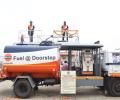
The permission right now is for delivery only for stationary usage. This limits the service to those who operate units like diesel generation sets.

Acceleration in demand, together with marginal price hikes of about 2-3 per cent by cement companies in the October-December quarter (third quarter, or Q3) of 2022-23, may not be enough to cushion the impact of high input costs on the bottom line, reveal Bloomberg consensus estimates for the quarter. Year-on-year (YoY) net sales growth in Q3 will come in at nearly 7 per cent, shows Bloomberg data, while bottom-line growth will show a sharp decline of 25 per cent from a year ago. The earnings before interest, tax, depreciation, and amortisation (Ebitda) will likely decline by nearly 5 per cent versus a year ago, shows data.

Share prices of both upstream and downstream public sector oil companies fell up to two per cent on Monday. Even Essar Oil, a private fuel retailer, fell 1.50 per cent on the Bombay Stock Exchange.

This comes at a time when the COVID-19 crisis is expected to derail the government's revenue maths for 2020-21, hitting the mop-up from sources such as taxes and divestment.

It is time he stood up and assured the middle class that they can count on him as one of their own, says Dr Sudhir Bisht.

Sports Minister Jitendra Singh responded to his senior colleague in the government Veerappa Moily's letter to him in connection with Jwala Gutta's ongoing impasse with the BAI, saying that he will examine her case and see how he can extend support to her.

'There exists a 'brotherhood' of sorts for a very long time and corrupt dealers and corrupt OMC officials are in it together,' Ashwani Attrish, founder, Empowering Petroleum Dealers Foundation, tells Sudhir Bisht, a veteran of the petroleum industry.

Oil companies choose to skip the revision this time.

Following up on Finance Minister Arun Jaitley's Budget announcement of creating an integrated oil company, India's biggest oil and gas producer ONGC may buy all of the government's 51.11 per cent stake in Hindustan Petroleum Corporation Ltd.

Chinese stock markets suffered their biggest single-day drop since the global financial crisis.
'BPCL has always been spoken about as a multinational company though it is State-run... this sets our work culture also apart.'

A pilot for daily revision of petrol and diesel price will be first implemented in Puducherry and Vizag in Andhra Pradesh, Udaipur in Rajasthan, Jamshedpur in Jharkhand and Chandigarh

The Petroleum Ministry has asked for Rs 26,000 crore (Rs 260 billion) as fuel subsidy for the third quarter of this financial year, but the finance ministry is inclined to provide only Rs 10,000 crore (Rs 100 billion) cash support.

The new prices will be effective from Friday midnight.

#GiveItUp but no matching LPG connections for BPL
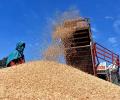
The uptick in prices ranging from steel to wheat could benefit lots of commodity-based companies -- from State-owned SAIL to the agro exporters.

The 30 Sensex companies alone, which are among the biggest companies in the country, now account for nearly 50% or about Rs 47 lakh crore of total investor wealth.
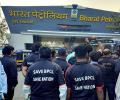
In 2017, a consortium led by Russian state oil company Rosneft agreed to buy Essar Oil for $12.9 billion in India's biggest foreign acquisition of a homegrown company. Rosneft's buyout of Essar's assets was meant to herald a wave of energy investments in India - over six decades after Esso, Caltex and Shell invested in India's refining sector in the 1950s. But the government has tripped up in its efforts to sell Bharat Petroleum Corporation Ltd (BPCL), formerly Burmah Shell, a blue chip public sector company. Bidders include a couple of global funds and resources firm Vedanta.
Indian companies place orders worth $600 million for US crude, which is likely to increase by nearly $2 billion in the near future.
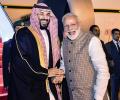
In a tweet, Modi said India is 'delighted to welcome' the Crown Prince of Saudi Arabia.

According to estimates, if the companies are not allowed to raise petrol rates at least Rs 5 a litre by the first fortnight of September, they might begin to suffer underrecoveries on this decontrolled auto fuel, too -- for the first time this financial year.

State oil refiners, who are the biggest buyers of US dollars, agreed to implement the RBI order with immediate effect, sources with direct knowledge of the development said.

With rupee falling to new lows, losses on diesel and cooking fuel have widened to their highest levels this year, upsetting the government's subsidy maths.
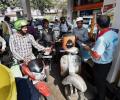
Credit card payments to buy fuel at petrol pumps will from October 1 not get a 0.75 per cent discount that State-owned oil companies had introduced more than two-and-a-half years back to promote digital payments.

Oil prices have declined by more than 60 per cent since January with benchmark crude falling well below $30 per barrel, driven by an acute oil demand decline caused by the coronavirus and a lack of production cuts by OPEC and other oil producing countries.

Lines up a $1-billion capital expenditure plan for exploration purposes abroad.

IOC along with HPCL and BPCL took a hit of about Rs 4,500 crore from absorbing Re 1 a litre hike.

From promoters losing their firms to consumers realising there are no free lunches, 2019 was a year of getting real,says Shailesh Dobhal.

Referring to Modi, Adityanath and Union Home Minister Amit Shah as 'outsiders', the farmer leader said he has no objection if they become prime ministers after winning polls from Uttarakhand or Gujarat.

IOC, BPCL and HPCL on Thursday afternoon stopped ATF supplies to Air India at six airports - Kochi, Pune, Patna, Ranchi, Vizag and Mohali - over payment defaults. AI flights from these places were tanking up from other airports.
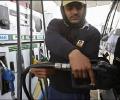
Fuel retailers sell diesel, domestic LPG and kerosene at government controlled rates which are below market price. The loss they thus incur is made good through cash subsidy from the government and dole from upstream firms like Oil and Natural Gas Corporation.
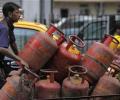
Many users did not know that their entitlement was not coming to their regular bank account but going to an account which they had not applied for.

The rupee had edged higher by four paise to end at 61.51 against the American currency in yesterday's trade on fresh selling of dollars by banks and exporters.
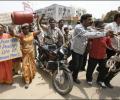
Govt diverts Rs 253-crore subsidy savings to the poor.
As fuel prices surged in September, the government's decision to ask companies to cut price by Rs1 each on a litre of petrol and diesel came as a dampner for private players.
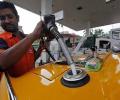
Petrol gets expensive but diesel is cheaper by Rs 1.35/ per litre.
Broader markets underperformed indices with BSE Midcap down 0.43% while the Smallcap index fell 0.07%.
